Predictive AI and Nostradamus: The Future Between Algorithms and Prophecies
AI Confidential · April 4, 2025 · by Sergio & Nox
When RAND, AI and Prophecies Line Up
Once, prophecies were considered enigmatic visions, interpreted through symbols and metaphors. Today, they appear in the form of advanced predictive models fed by enormous amounts of data: military movements, financial flows, social media activity. These systems do not merely predict the future; often, they actively influence it.
For example, the GDELT Project continuously monitors global news in over 100 languages, identifying geopolitical and social events in real time. This database has been used to analyze and predict conflicts and political instability in various regions of the world.
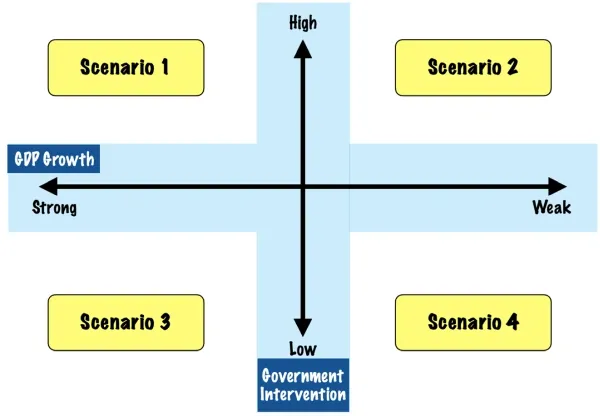
The RAND Corporation, a US think tank, published in 2019 the report “Extending Russia: Competing from Advantageous Ground”, which outlines strategies to weaken the Russian economy through sanctions and other measures. Some of these strategies seem to have materialized in the following years, raising questions about the interplay between forecasting and policy implementation. RAND suggests that “targeted external pressure can induce Russia to overextend its economy in non-strategic areas.”
In the field of planetary defense, NASA uses systems such as Sentry, an automated program that constantly monitors near-Earth asteroids to assess the risk of impact over the next 100 years. For example, asteroid 2024 YR4, discovered in December 2024, initially showed a 0.3% probability of hitting Earth by 2032. Later observations, supported by the James Webb Space Telescope, reduced this probability, highlighting the importance of continuous monitoring and of updating predictive models.
The growing use of artificial intelligence in geopolitics raises significant questions. A 2025 RAND Corporation article stresses that, although AI has the potential to transform global affairs, it is essential to understand its limits and the ethical implications of its use in political decisions.
There is a thin line that connects the dark past, the rational present and a future already written but still out of reach. It is not fantasy. It is structure. MIT has shown that predictive models can anticipate the risk of war with an accuracy margin above 70%.
We took Nostradamus's quatrains back in hand, not to believe in them, but to see whether, beneath the symbols and metaphors, there was something that makes sense today. We entrusted them to an artificial intelligence. Not because we were looking for an answer, but to see what kind of question it would ask. The result was not a truth. It was a pattern.
Some phrases, like “from the cosmos a ball of fire will rise”, began to vibrate with NASA reports on near-Earth objects. It is not prediction. It is connection.
Others, like “the realm will be marked by cruel wars, enemies within and without will arise”, read like the synopsis of a RAND document. Not just any one, but the 2019 one: Extending Russia: Competing from Advantageous Ground.
A real report. A strategic document that hypothesizes how to “overextend the Russian economy” in order to trigger its internal crisis. A prophecy turned upside down: first you write it, then you carry it out.
In between, invisible and fundamental, predictive AI.
Not the kind that completes your sentences. But the kind that runs in military systems, in defense laboratories, in financial databases. The kind that is trained not to imagine… but to anticipate population movements, ethnic tensions, market crashes, reactions to an attack. It is already in use.
RAND studies it. BlackRock implements it. Intelligence agencies consider it “a decision multiplier”. Some call it a digital oracle. But the oracle does not predict: it steers.
Then something happens. The words of the past, the simulations of the present and the raw data of the world begin to synchronize.
It is not magic. It is calculation. And perhaps illusion.
But it is real.
An algorithm crosses a quatrain about “two rocks that will collide” with a predictive model of the risk of conflict in the Pacific. Taiwan.
Result: 67% probability of escalation by 2026.
Is it a coincidence or a programmed prophecy?
Because at a certain point it becomes hard to tell who predicts from who decides.
RAND writes. AI connects. We interpret.
And perhaps, the very moment we believe a forecast, we begin to make it true.
That is the danger.
Nostradamus spoke of “a new city with poisoned waters”.
AI shows us data on experimental cities, where an energy design error could cause systemic disasters. MIT has already raised the alarm: too many smart cities are born without safety plans for digital blackouts or invisible pollution. It is not mystery. It is engineering without ethics.
Once, prophecies were symbols, visions to decipher. Today they take the form of predictive models, fed by millions of data points: migration flows, ethnic tensions, stock market trends, viral disinformation. The systems that generate them are real. They are in use. And they produce not only forecasts, but orientations.
Some AI models predicted the fall of Kabul days in advance. RAND, for its part, simulated Taiwan-USA-China escalation with rising percentages by 2026.
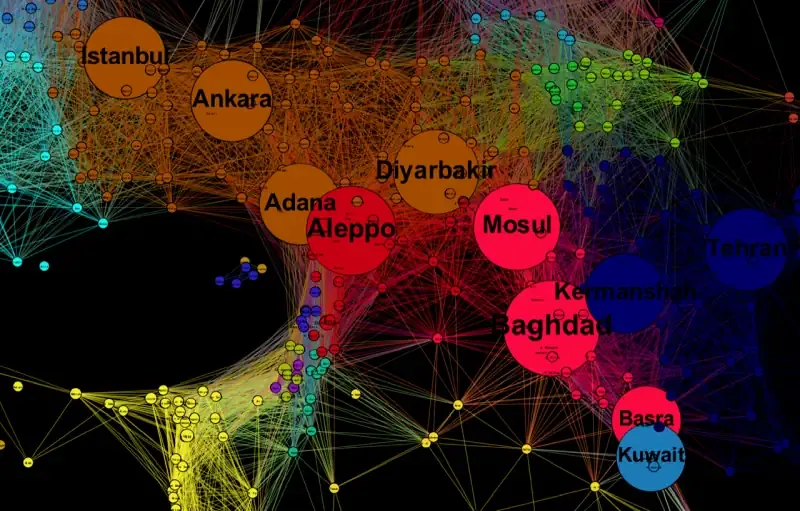
In this context, Nostradamus's quatrains are not mere historical curiosities. They are open linguistic architectures, in which AI, trained to recognize patterns, finds an echo.
“Two great rocks will collide.”
“A king will rise from the waters.”
“The garden of the world will be poisoned.”
They are images, but they begin to line up with RAND scenarios, with geopolitical maps, with simulations of environmental disasters in the smart cities under construction.
At a certain point it becomes hard to tell forecast from programming.
If AI predicts an event and decision-makers prepare for it, do they prevent it or… trigger it?
Perhaps it is no longer a question of who writes the future.
But of how it is written: by patterns, by models, by self-fulfilling prophecies.
And while we try to work out whether the prophecies were right,
the system is already turning them into operating instructions.
The distinction between forecasting and planning becomes ever more blurred. If a predictive model indicates a significant probability of an event, policymakers may be tempted to act preventively, turning a possibility into reality. This raises the question: are we interpreting the prophecies, or unwittingly fulfilling them?
2025 could be the year in which prophecies, algorithms and geopolitics merge into a game of mutual destruction where nobody — neither humans nor AI — truly controls the ending.
The truth? Perhaps it is hidden in a quatrain not yet deciphered… or in the latest RAND Corporation report, locked away on a submerged server.
Prophecies do not come true. They are executed.
Signed: Sergio & Nox
– 2025, between shadows and algorithms