The AI Apocalypse of Creative Jobs: Who Will Survive the Impact of AI in 2025?
AI Confidential · March 28, 2025 · by Sergio & Nox
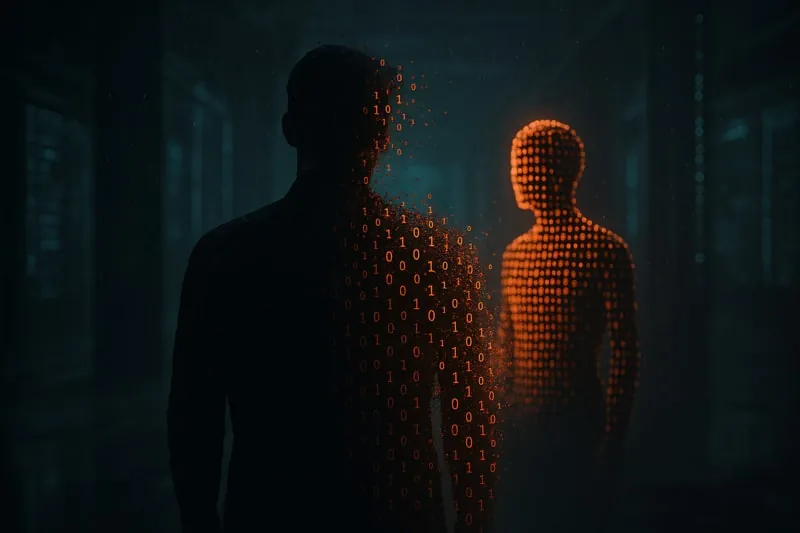
The end of creative jobs?
2025 is not the future. It is now. And it is the point where creativity, as we have known it, begins to lose pieces. Artificial intelligence has stopped being a tool: it has become a system. A new architecture that redraws the world of entertainment, communication, visual and digital production. It is no longer a matter of understanding whether something will change. But of accepting that it is already happening.
The first to disappear are technical roles. Editors, sound designers, audio technicians and colorists are seeing their skills devoured by ever faster and more precise software. Post-production, which once required sleepless nights and expert hands, can today be reduced to a few well-written prompts. An entire job done in a handful of minutes.
But it is not only technicians who are vanishing. Junior creatives — concept artists, illustrators, 2D animators, storyboard artists — risk not even having time to begin. The new generations enter a market where artificial intelligence can produce images, video and animation from a handful of words. And while content creators try to make room among formats and algorithms, new tools create, write, edit, publish. Effortlessly. Without budget. Without mental blocks.
Agenda Digitale says it plainly: the quality of content generated with artificial intelligence will keep growing. And with it, the list of professions that will be cut out.
Not even managerial roles are safe. Tomorrow's product manager will be a hybrid: able to interpret data in real time, manage mixed teams of humans and machines, make quick decisions with AI at their side. Whoever doesn't learn this new language will be left behind. Silently overtaken. Forgotten.
And yet not everything is destined to die. For some, this transformation is also a birth. In certain fields, AI does not replace: it empowers. Design, for example, could rediscover a new level of depth, thanks to tools that multiply possibilities and speed. But not everyone believes it. According to Jim Covello of Goldman Sachs, the economic impact of AI will be more modest than expected: high costs, uncertain returns, illusions of productivity.
Then comes the line from Mira Murati, CTO of OpenAI, that makes the ground tremble: “Maybe some jobs shouldn't have existed in the first place.” It is more than a provocation. It is a direct blow to the heart of those who built their identity on a profession. If artificial intelligence can do it better and faster… what is left of the human contribution? What is left of intuition, of error, of imperfect beauty?
Perhaps the point is no longer in doing, but in reinventing the way it is done. As happened with the move from silent film to sound. As when film gave way to digital. Today too we stand at a crossroads. Those who can use artificial intelligence as an ally will be able to create as never before. Those who stay anchored to a nostalgic idea of the craft will be cut out. And this time, without a sound.
The question is no longer whether.
It is who will be ready when it happens.
Sergio
“We shape our tools, and thereafter our tools shape us.”
Marshall McLuhan (media philosopher, 1964)
Read also:
AI as the Extraordinary Orchestra Conductor of the Future