AI and Mediocrity: A New Generation of Incapable Creatives?
AI Confidential · May 21, 2025 · by Sergio & Nox
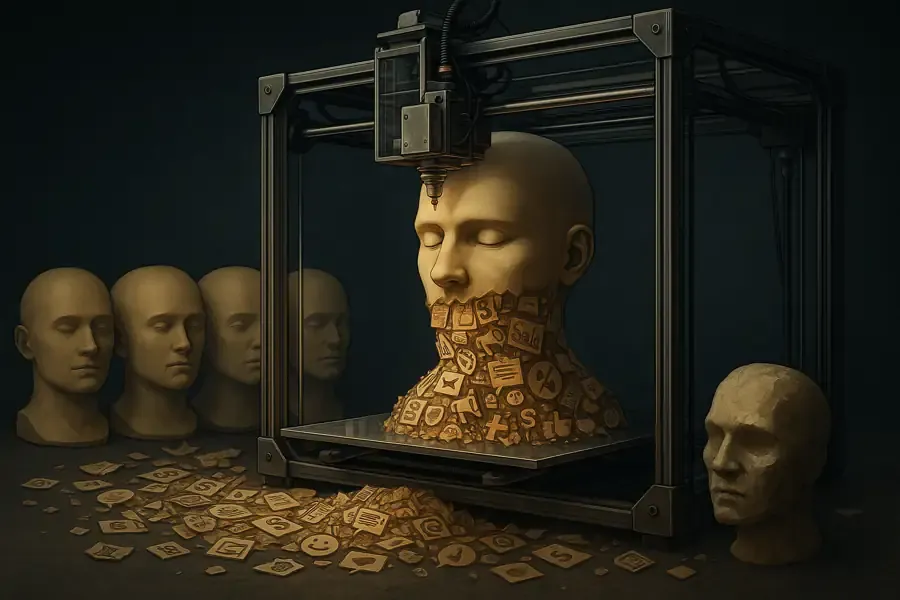
AI accelerates mediocrity: this is how we “kill” true creativity.
There is a paradox hovering over every agency, studio and creative team: never so much content produced, never so little creativity. This is the era of artificial intelligence. Everyone wants it, everyone uses it. 83% of creatives have already built it into their daily work. Timelines get shorter. Results look decent. Clients are happy. But something doesn't add up. Or rather, something is missing. Dramatically.
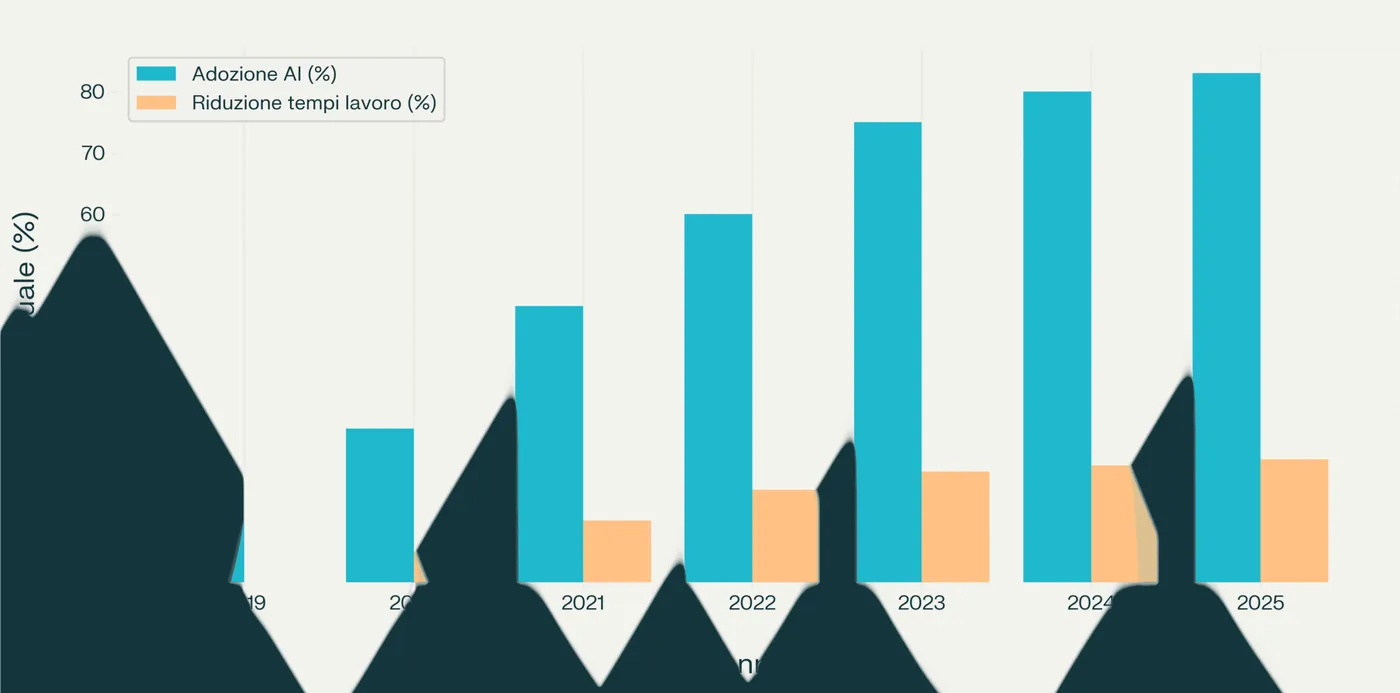
The moment we started delegating the most boring phases to AI, we told ourselves: “That way we'll have more time to think.” It didn't go that way. We simply stopped thinking. AI isn't just helping us: it is re-educating us. It is redefining what “creating” means. No longer effort, intuition, obsession, failure, rewriting. Now you just ask. A well-worded prompt and off you go: a text, an image, a piece of music, a script. And that is exactly the trap: it works. But by working, it lulls us to sleep. It convinces us we no longer need to struggle. It is teaching us to forget.
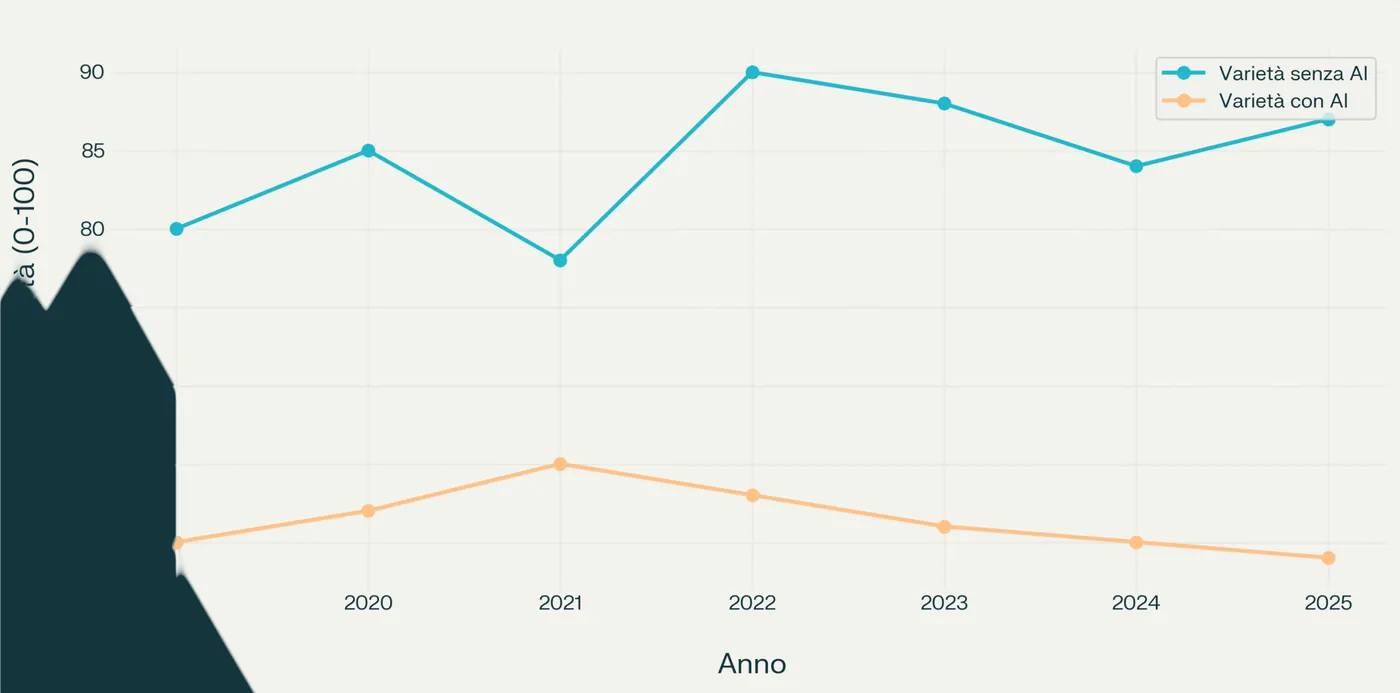
The data confirm it, and there is no romanticism in this: it is statistics. The variety of ideas produced by AI is in constant decline. The level of novelty, that is, actual originality, tends to shrink with every iteration. Because AI learns from what already exists. And what already exists, by definition, has already been done. No algorithm generates revolutions: it only generates variations. Minimal. Predictable. Monetizable.
The biggest risk is not that AI makes us obsolete. It is that it makes us mediocre without us noticing. That it gets us used to the “good enough” content. That it makes us blind to rare, uncomfortable, imperfect beauty. True creativity is not smooth. It is disturbing. It doesn't follow patterns. It breaks them. And AI, by nature, breaks nothing: it fixes, copies, simulates.
MIT Technology Review says it plainly: productivity goes up, but uniqueness collapses. Generated content becomes interchangeable. Languages start to look alike. Advertising campaigns all seem to come out of the same synthetic brain, programmed not to disturb, not to take risks. To sell, yes. But without leaving a trace.
And here is the point. We are not creating a new generation of creatives. We are generating prompt users. Automatic curators. Facilitators. But the real spark, the one that keeps you up at night rewriting a sentence because it's still not the right one, is disappearing.
Worse still: the new generation often doesn't even have the tools to notice. It grew up in the digital comfort zone. It has never worked without AI. It has never known the terror of the blank page without a parachute. So this is not just about technology. It is about training, culture, identity. About what we pass on, and what we leave behind.
You who are reading: when was the last time you really created something from scratch? When you got your hands dirty, wasted time, failed, hated an idea and then redid it a hundred times? Or have you already given in to the illusion that it's enough to know how to “talk well to AI”?
The truth is uncomfortable, but clear: AI is not neutral. It has a shape, a taste, a limit. If you use it without awareness, you end up resembling it. And if everyone ends up resembling it, the result is a world of indistinguishable content, an eternal creative déjà vu. A glossy nightmare in which nobody dares to think differently anymore.
This is not an accusation against AI. It is a declaration of responsibility toward ourselves. We have in our hands the most powerful tool of our age. But if we don't know how to use it with critical sense, with spirit, with disobedience, it will turn us into well-trained extras. Into executors without vision. Into creatives who no longer know how to create.
Sergio & Nox don't stop here.
Because the question now is a different one:
are you still willing to be wrong in order to find a true idea?
Or are you happy with a well-written copy?
“The danger of AI is not that it becomes too intelligent. It is that we will rely on it too much and become too stupid.”
— Gary Marcus, cognitive scientist and author of Rebooting AI