AI Is Ready. Is the School?
AI Confidential · May 29, 2025 · by Sergio & Nox
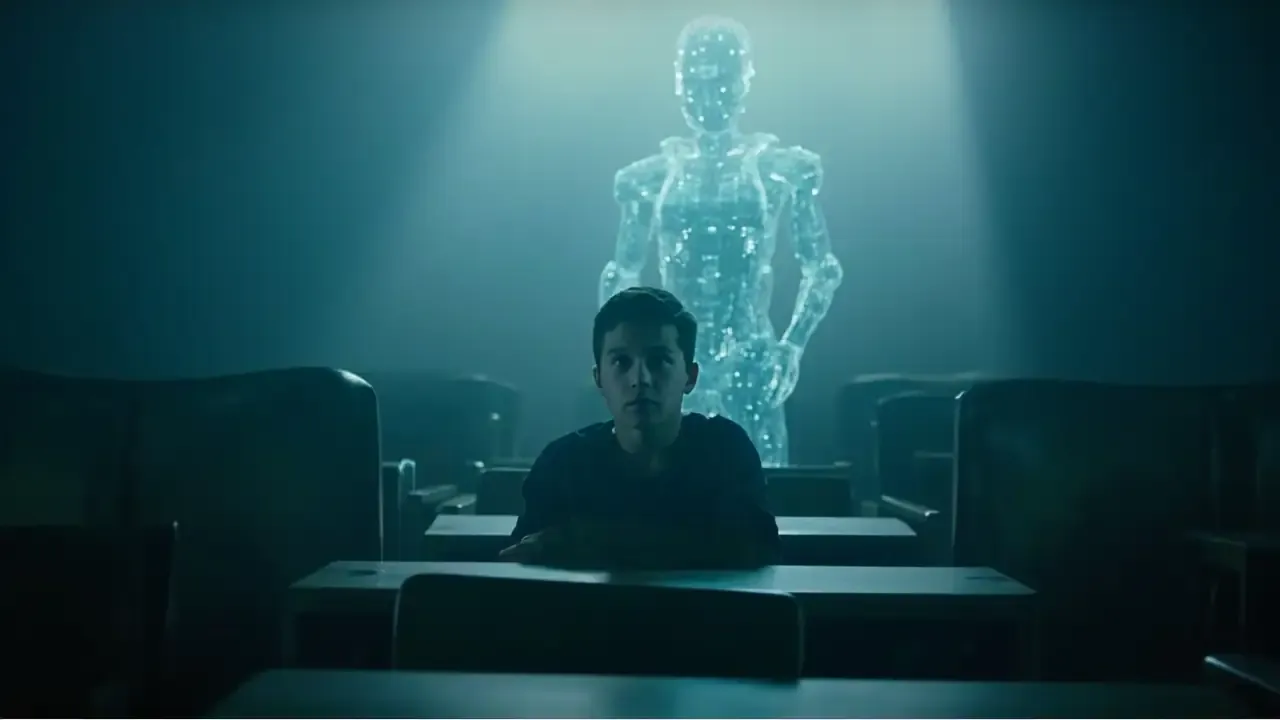
Artificial intelligence at school is already a reality. But who is steering it?
Artificial intelligence at school is no longer news. It is a deskmate. According to a recent survey by Skuola.net, 68% of Italian students use it for homework, research and short papers. ChatGPT has become the new ally, but also the new alibi. The real question is: is the school ready?
The Italian education system stands at a crossroads. Either integrate artificial intelligence at school as a tool to strengthen learning, or suffer it as a mental shortcut. Only 52% of teachers say they are truly prepared to use it (source: Censis). And while guidelines are late, many teachers fear it, others ignore it, very few understand it.
In the United States the path is further along. Georgia Tech created “Jill Watson”, an AI assistant that answers students in support forums, without anyone noticing its non-human nature. At the University of Illinois, artificial intelligence is used to provide personalized, immediate feedback, with an increase in engagement of up to 30% (source: OECD 2023).
In Italy, too, the first concrete steps are being taken: the Ministry of Education has launched a pilot in 15 schools, with the aim of introducing AI tutors to support struggling students, assist teachers and test personalized pathways. In parallel, school networks such as the one in Friuli Venezia Giulia are working on ethical guidelines for the use of artificial intelligence at school.
In Italy, the use of AI among students and teachers is now widespread: 68% of the students who use it intend to keep doing so in the future, and 65% use it to do homework and write essays. ChatGPT and similar tools are seen as useful by 54% of students, who recognize their positive impact on their school experience. Among teachers too, especially younger ones, there is openness toward these technologies, seen as allies for teaching and for personalizing learning.
But the transformation is not only technical. It is cultural and ethical. The ability to evaluate the reliability of sources, to tell a generated answer from an understood one, to educate toward doubt – all of this remains human. And it remains the true heart of the school. As the educator Paolo Ferri warns:
“Kids risk becoming executors of prompts, not thinkers.”
Another challenge is territorial. The digital divides between north and south, between big cities and small towns, between well-equipped technical institutes and under-resourced middle schools, risk creating a deep fracture. Artificial intelligence at school can accentuate these differences if it is not accompanied by structural investment and systematic teacher training. Because without training, AI remains a neutral tool — or worse: a misused one.
But there are dissenting voices. Like that of Salvatore Giuliano, headteacher and former undersecretary, who states: “AI can democratize learning and bring out individual talents, if used with awareness.” A confident view that is borne out by the numbers: where AI is integrated with method, students participate more, and results improve.
The real risk is not artificial intelligence. It is the absence of vision. Without human guidance, AI can become a convenient but dangerous crutch. A neutral technology in the wrong hands. Or worse: an alibi.
Neither miracle, nor threat. Only an enormous responsibility.
Artificial intelligence will not save the school. But it will not destroy it either. It will be a mirror. It will reflect exactly what adults know — or don't know — how to pass on.
Experiences such as “Jill Watson” in the USA or the digital tutors in Italy show that artificial intelligence at school can strengthen learning and personalize teaching. But without culture, without ethics, without vision, no algorithm will be enough.
“AI can support teaching, but it can never replace the teacher. The human dimension of education is irreplaceable.” — UNESCO, Artificial Intelligence in Education: Challenges and Opportunities, 2021
The technology is ready. The real test, now, is entirely ours.
“We must not fear artificial intelligence. We must fear the ignorance with which we use it.”
Salvatore Giuliano (Italian headteacher and promoter of digital innovation, interview in Il Sole 24 Ore, 2023)